MN Cottage Food Label Requirements
MN cottage food label requirements are set by Minnesota's cottage foods law (Minn. Stat. 28A.152): your name, your registration number or address, the date you made the food, the ingredients with any allergens, and the sentence "These products are homemade and not subject to state inspection." The same sentence goes on a sign where you sell and on your website.
Five things on every Minnesota cottage food label
Minnesota's food labeling requirements for home producers are short, but each one is checked by the MDA.
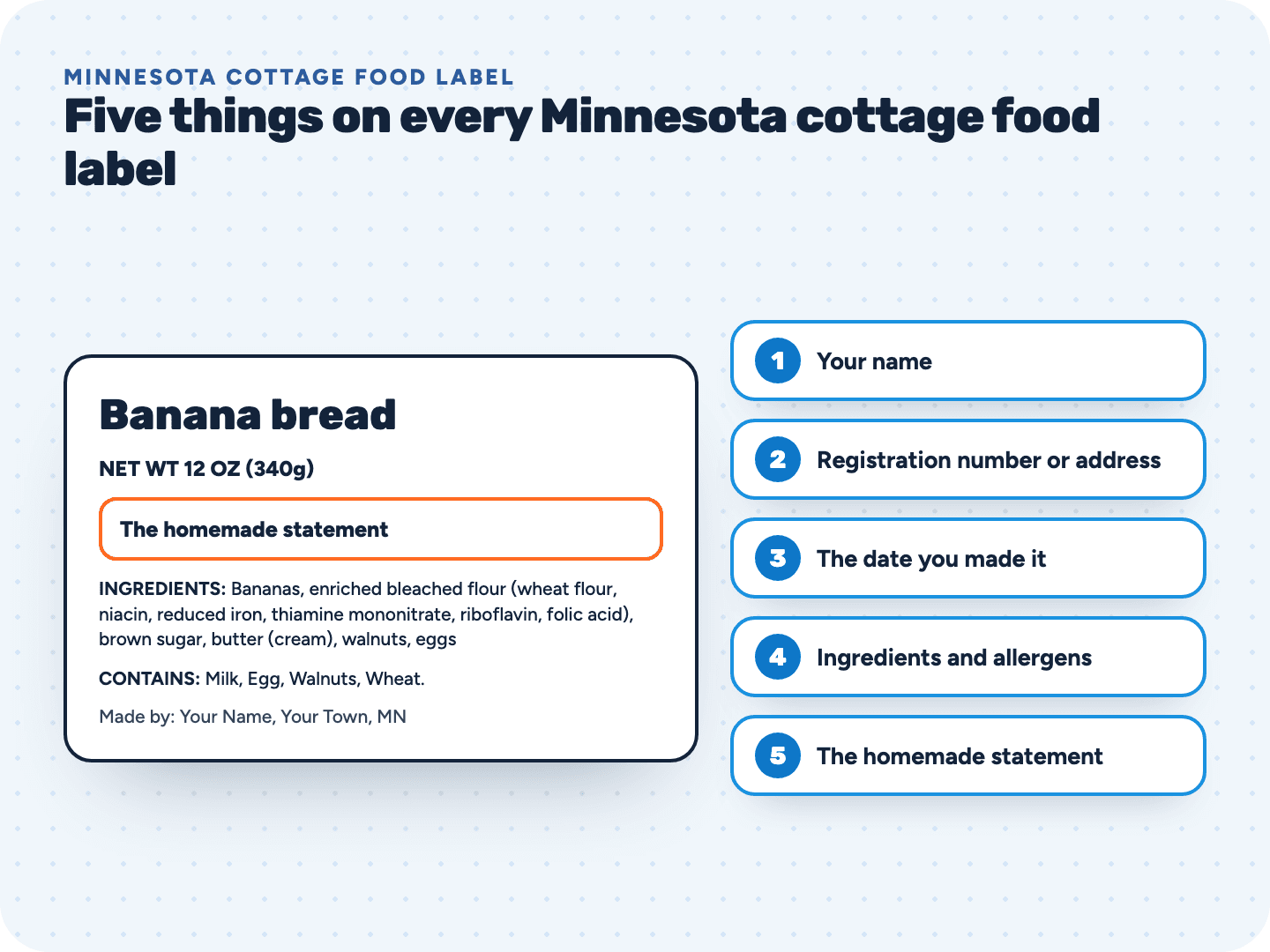
- 1Your nameMinn. Stat. 28A.152, subd. 1Your full name or your cottage food business name.
- 2Registration number or addressMinn. Stat. 28A.152, subd. 1Your MDA cottage food registration number, or your address. The number keeps your home address off the label.
- 3The date you made itMinn. Stat. 28A.152, subd. 1The date the food was prepared. For home-canned goods, the date they were processed and canned.
- 4Ingredients and allergensMinn. Stat. 28A.152, subd. 1All ingredients, with the 9 major allergens called out. The MDA accepts either "flour (wheat)" in the list or a line like "Contains wheat, milk, soy". Name the animal for other milks and eggs: goat milk, duck egg.
- 5The homemade statementMinn. Stat. 28A.152, subd. 1Word for word: These products are homemade and not subject to state inspection.
- Put the same sentence on a signSign ruleAt every market table, event booth or home stand, show a clearly legible sign or placard with the homemade statement. Selling online? It must be on the web page where people order. A QR code can add info, but it can't replace anything on the label.
Sales limit, registration and training
Where this comes from
- MDA: Cottage Food Producer RegistrationOfficial state page: tiers, fees, label and sign
- MDA: Cottage Food Law GuidanceAllowed foods, allergens, honey and where to sell
- Minnesota Statutes section 28A.152The law itself, including the label statement
- Minnesota Statutes section 28A.15Farm and garden products left out of food licensing
- House File 2446 (Minnesota Session Laws, chapter 34)The coming change to the cottage food program
Minnesota label questions
Not yet for food made for people. Right now you or an employee deliver it in person within Minnesota. House File 2446 allows shipping within Minnesota once it takes effect. Dog and cat treats can already be shipped. Minnesota Cottage Food Law →
No. Cottage food can't be wholesaled or resold by a business. For that you need a Minnesota food license.
Minnesota doesn't require one. Federal rules can still apply, for example if you make a nutrition claim on the package.
No. The MDA says QR codes can't take the place of required label information. Add one if you like, next to the full label.
Anything that needs to be kept cold or hot for safety. The MDA names cheese, yogurt, butter, ghee, jerky, pickled eggs, tamales, egg rolls, charcuterie boards, chocolate-covered fruit and THC or CBD edibles.
See your label before you pay anything
Free preview, no account. $29 when you're ready to print.