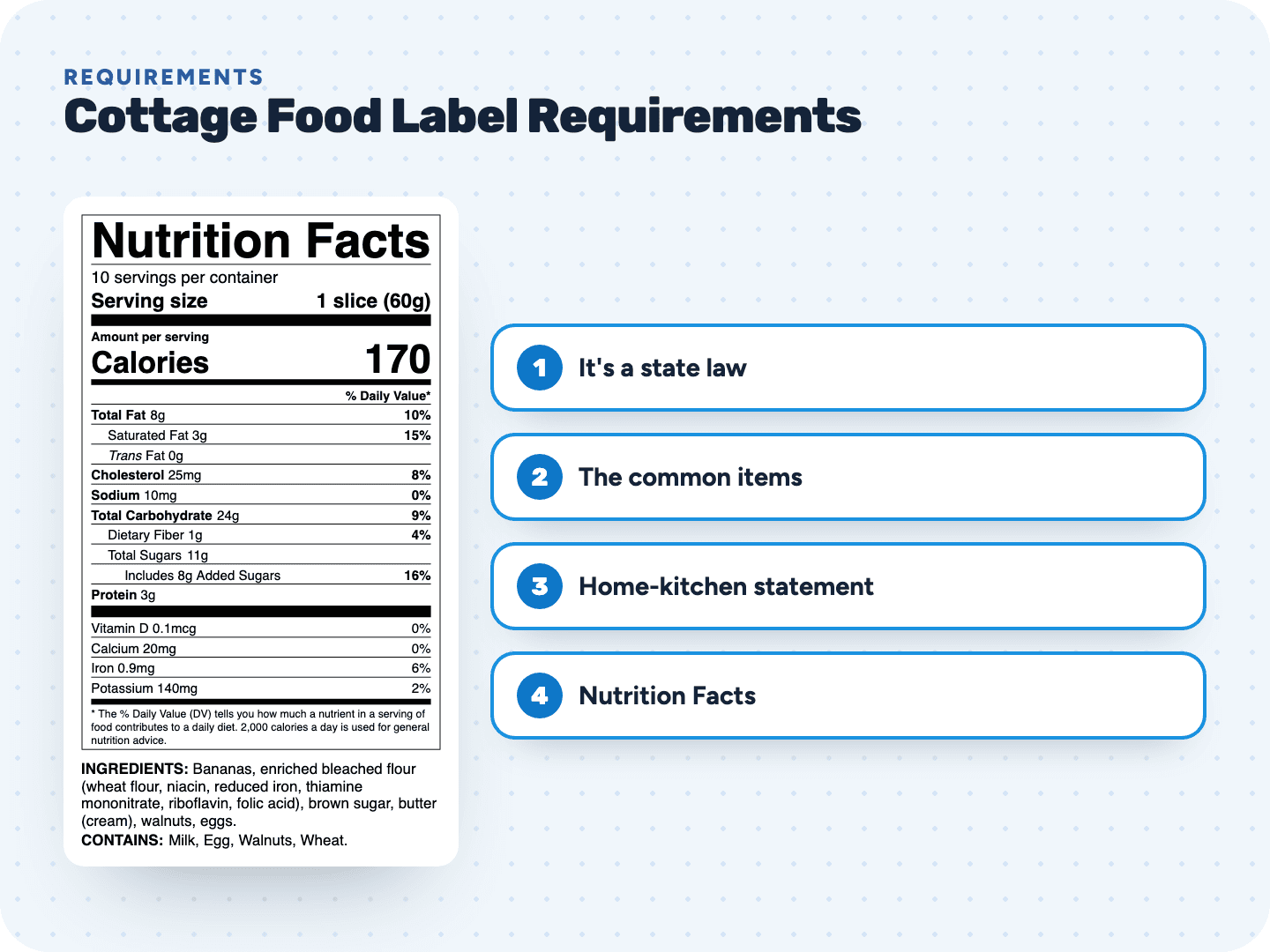
Cottage food is a state matter
Cottage food laws let you sell certain foods made in your home kitchen. Each state writes its own law: which foods are allowed, where you can sell, sales limits, registration and the label.
That means no single label works in every state. Use this page to understand the pattern, then check your own state's rules line by line.
What cottage food labels usually include
- The common name of the food, like "Banana bread" or "Pecan pralines"
- Your name and address, or in some states a registration or permit number instead of your home address
- The ingredients, from most to least by weight
- Any of the 9 major food allergens: milk, eggs, fish, crustacean shellfish, tree nuts, peanuts, wheat, soybeans and sesame
- A home-kitchen statement saying the food was made in a kitchen that isn't inspected
Some states also ask for the net weight, the date you made the food, your permit or registration number, or a link where buyers can report a problem. Not every state requires an ingredient list. Texas, for example, only asks for allergens.
The home-kitchen statement
This is the line with the least room for error. Many states prescribe the exact words, sometimes in capital letters or a minimum type size, and expect them printed word for word.
- Copy the statement from your state's law or agency page, not from someone else's label
- Don't shorten, reword or add to it
- Follow any capital letters or minimum type size your state sets
- If you sell online, check whether the statement must also appear on your product page
Do cottage foods need Nutrition Facts?
Many cottage food laws don't ask for one. On the federal side, a seller with small sales can be exempt too, as long as the label and ads make no nutrition claim. Write "low sugar", "high protein" or "only 90 calories" and the exemption is gone.
Plenty of home bakers add a Nutrition Facts panel anyway. Buyers ask for it, and it looks like a brand that takes its product seriously. Our tool makes one from your recipe with a free preview, so you can see it before you decide.
Start a label →Allergens matter most
Home-baked goods almost always contain wheat, milk or eggs, and many contain tree nuts. Name every one, and name the nut itself: pecans, almonds, walnuts. Our tool flags all 9 major allergens from your recipe and writes the Contains line for you.
Allergen labeling requirements →How to check your state's rules
- Find your state's cottage food page, usually at the health department or the agriculture department
- Read the label section of the law or rule itself, not only a summary
- Note the exact home-kitchen statement and any type size rules
- Check whether you need to register, and whether a registration number replaces your address
- Check the rules for online sales and for selling to stores or across state lines
Selling beyond what your cottage food law covers, like through stores or to other states, usually means the full federal label rules apply.
FDA food labeling requirements checklist →Example: a banana bread label
- Banana bread
- Ingredients: Bananas, wheat flour, sugar, eggs, canola oil, walnuts, baking soda, salt
- Contains: wheat, eggs, walnuts
- Net Wt 14 oz
- Made by: your name, street address, city, state, ZIP (or your registration number, where allowed)
- Your state's home-kitchen statement, word for word
Swap in what your state asks for. The order and wording of the statement come from your state, not from this example.