South Dakota Cottage Food Label Requirements
South Dakota cottage food label requirements come from one statute, SDCL 34-18-37: the product name, your name, the physical address where you made it, your mailing address, your phone number, the date made, the ingredients, and a disclaimer that the food was home-processed in a kitchen that may also handle common allergens. Cold foods add a keep refrigerated or frozen line. No license and no fee, as long as every package is labeled.
Required on every South Dakota home food label
Food prepared at a residence may not be sold without a label. These are the items the law lists, in its own order.
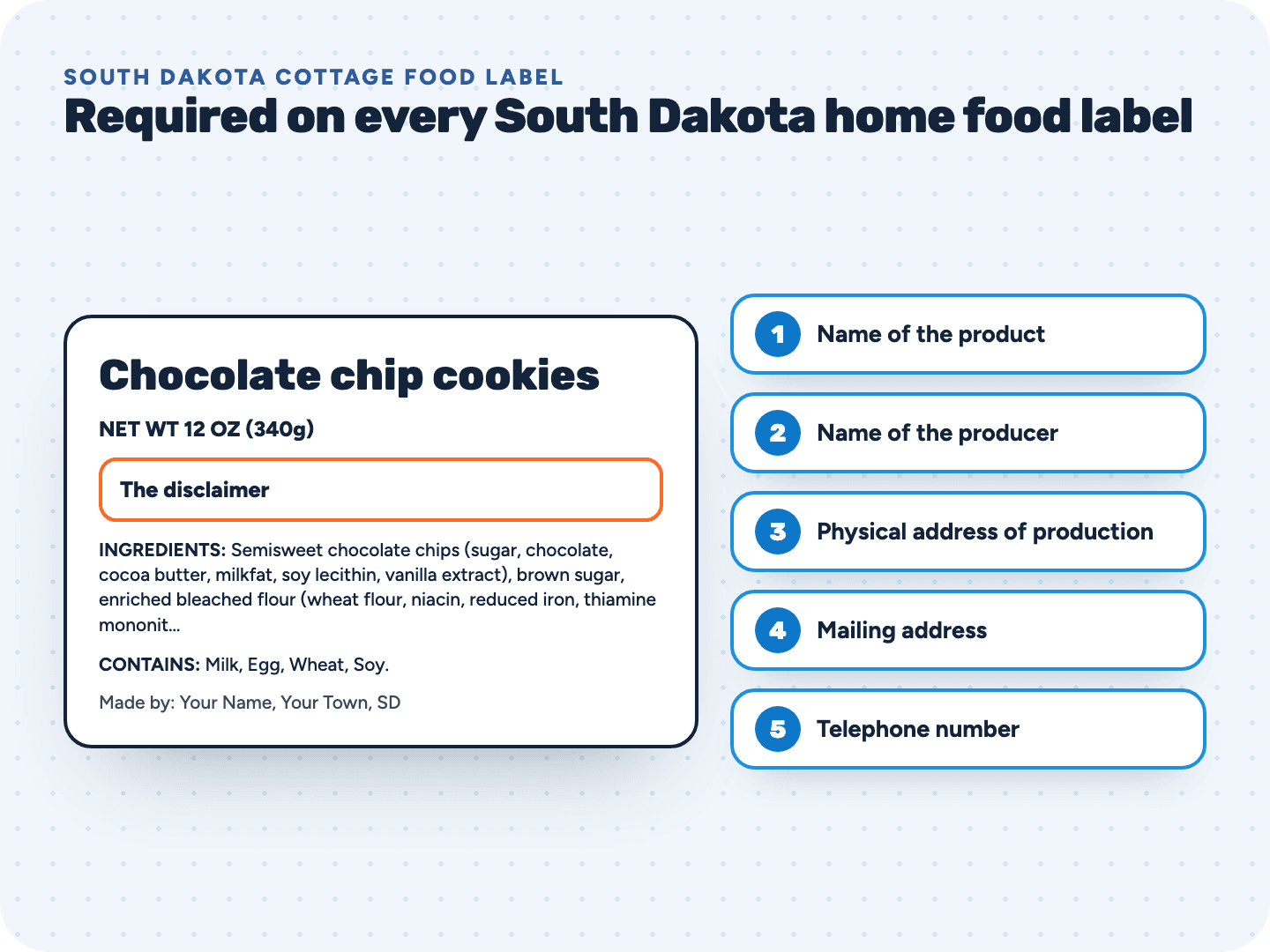
- 1Name of the productSDCL 34-18-37What it is, like "Rhubarb Kuchen" or "Chokecherry Jelly".
- 2Name of the producerSDCL 34-18-37The person who made the food.
- 3Physical address of productionSDCL 34-18-37The street address of the home kitchen where you made it.
- 4Mailing addressSDCL 34-18-37The producer's mailing address, as its own item.
- 5Telephone numberSDCL 34-18-37A phone number for the producer.
- 6Date made or processedSDCL 34-18-37The day you baked, canned, fermented or froze the food.
- 7IngredientsSDCL 34-18-37What is in the food. Listing them by weight, heaviest first, is the federal standard and the easiest way to show sesame or any other allergen the disclaimer doesn't name.
- 8Keep refrigerated or frozenSDCL 34-18-37 · 34-18-36.1Only for the cold foods you may sell after training: cheesecake, kuchen, cream or custard-filled baked goods, fermented foods, sauces, pesto and frozen produce.
- 9The disclaimerSDCL 34-18-37Word for word: This product was not produced in a commercial kitchen. It has been home-processed in a kitchen that may also process common food allergens such as tree nuts, peanuts, eggs, soy, wheat, milk, fish, and crustacean shellfish.
- A long disclaimer needs roomSize tipThe disclaimer runs to two sentences and the law sets no type size for it. On a small jar lid it won't fit, so plan a side or back label big enough to stay readable.
License, training, sales cap and where you sell
Where this comes from
- SDCL 34-18-37: Label requirementsThe label items and the exact disclaimer
- SDCL 34-18-38: Exemption from licensureNo license or fee, in-person sales venues
- SDCL 34-18-36: Canned goodspH and water activity, training, processing authority
- SDCL 34-18-36.1: Food safety training, authorized salesRefrigerated and frozen foods allowed after training
- SDSU Extension: South Dakota Cottage Home Processing Food SafetyTraining, free recipe reviews, honey and jerky
South Dakota label questions
Yes. The law asks for the physical address where the food was made, plus a mailing address and a phone number. South Dakota Cottage Food Law →
Keep it exactly as the statute writes it. If your food contains an allergen it doesn't name, like sesame, make sure your ingredient list shows it.
South Dakota requires the date the product was made or processed on every label, for baked goods as well as canned goods.
No, the state label list doesn't include it. A nutrient claim like "low sugar" or "high protein" brings in the federal rules, and then you may need a panel.
A directive to keep the food refrigerated or frozen. The law asks for it on the cold foods you may sell after the food safety training.
See your label before you pay anything
Free preview, no account. $29 when you're ready to print.