Washington State Food Labeling Requirements
Washington state food labeling requirements for home bakers and candy makers come from the WSDA cottage food permit: your business name and permit number, the product name, every ingredient (sub-ingredients too), the net weight or volume, allergens, and the line "Made in a Home Kitchen that has not been subject to standard inspection criteria." in 11-point type. Sell up to $35,000 a year, face to face, inside Washington. Bigger plans need a food processor license, and then the full federal label applies.
Required on every Washington cottage food label
The Washington State Department of Agriculture (WSDA) checks your labels before it issues the permit. Print them in English with these seven parts.
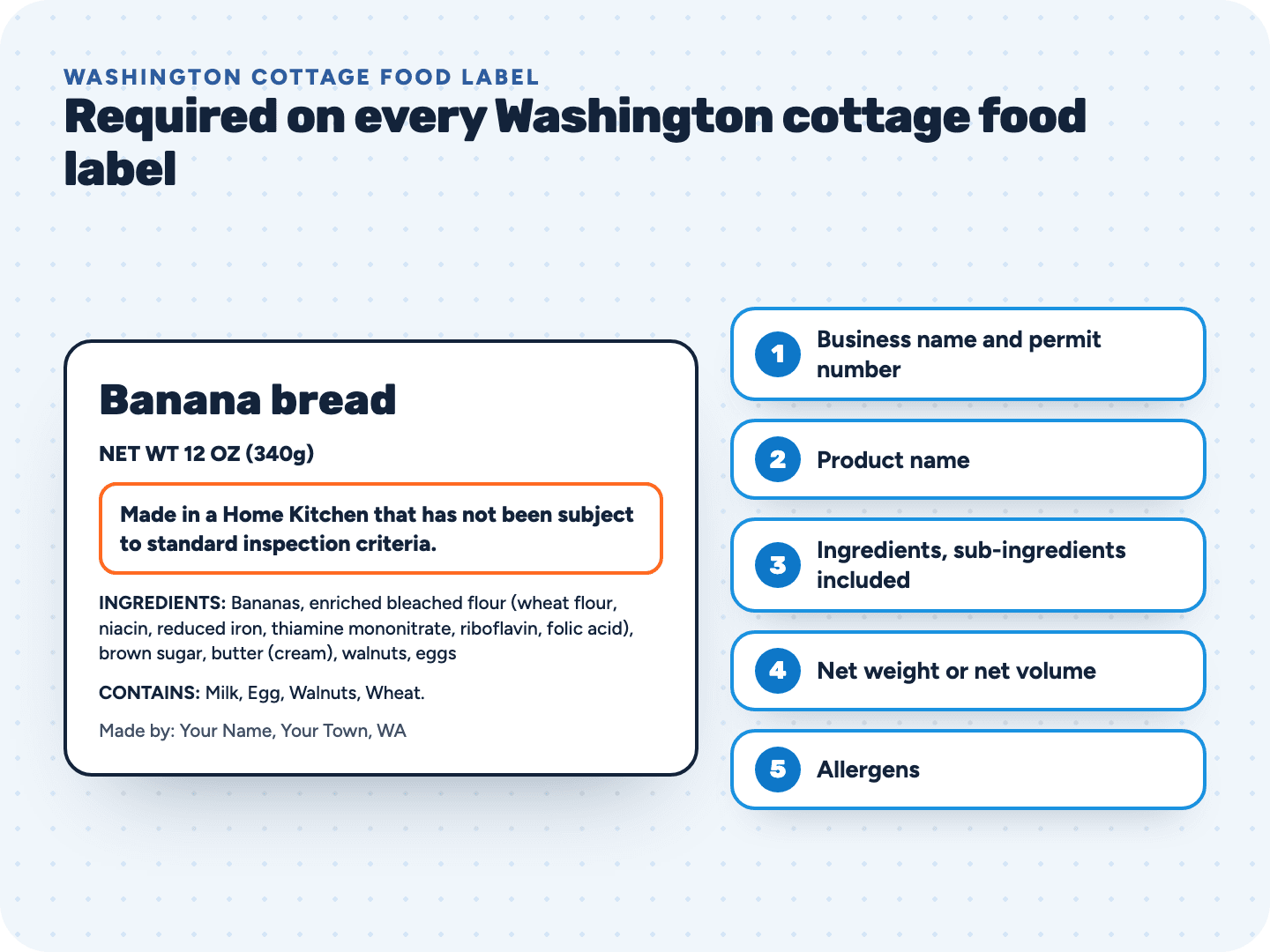
- 1Business name and permit numberWAC 16-149-110The name of your cottage food business plus the permit number WSDA gave you.
- 2Product nameWAC 16-149-110What it is, like "Huckleberry Jam" or "Sea Salt Caramels".
- 3Ingredients, sub-ingredients includedWAC 16-149-110In descending order by weight. Ingredients made of other ingredients list those too, like imitation vanilla extract (water, sugar, caramel color, artificial flavor, citric acid, sodium benzoate (preservative)).
- 4Net weight or net volumeWAC 16-149-110How much is inside, like "NET WT 8 oz". Washington does not require the metric weight on cottage food.
- 5AllergensWAC 16-149-110As federal rules require: name the major allergens, for example in a "Contains: milk, wheat, eggs" line.
- 6Nutrition facts, only after a claimWAC 16-149-110Write "low sugar" or "high fiber" and you need the nutrition information federal rules ask for. No claim, no panel needed for the permit.
- 7The home kitchen statementWAC 16-149-110 · RCW 69.22.020At least 11-point type, in a color that contrasts with the label: "Made in a Home Kitchen that has not been subject to standard inspection criteria."
- Wedding cakes and bulk boxesLabel sheetWSDA may let large cakes or bulk containers go without a stuck-on label. Then you hand the customer a product label sheet with all seven parts, and the food stays protected on the way.
Permit, fees, sales cap and where you sell
Where this comes from
- WSDA: Cottage Food OperationOfficial state page: the $355 fee, the $35,000 cap, permit facts
- Chapter 16-149 WAC: Cottage foodsThe label rule, fees, sales limits, allowed and prohibited foods
- Chapter 69.22 RCW: Cottage food operationsThe statute: label minimums, the statement, the sales cap
- Chapter 69.28 RCW: Washington state honey actHoney container markings, grades, blends and imitation honey
- Chapter 69.07 RCW: Washington food processing actThe food processor license and its fee table
Washington label questions
You can show your products on a website and take orders, but every sale has to be completed in person. Shipping and mail order are not allowed, and neither are sales outside the state. Washington Cottage Food Law →
Not with a cottage food permit. Consignment and wholesale are prohibited, and a food service establishment may not sell your cottage food. For that you need a WSDA food processor license.
Anything that needs refrigeration, like cream, custard or cream cheese fillings. Also meat, jerky, fish, dairy, canned vegetables and salsas, pickles, sauerkraut, barbecue sauce, ketchup, mustard, garlic in oil, juices and other beverages. Cottage Food Permit →
Only if you make a nutrition claim. The permit rules ask for nutrition information when a claim like "low fat" is on the label. Licensed processors follow federal rules, where many small businesses qualify for an exemption as long as they make no claims.
Two years. It expires two years from the last day of the month it was issued, and you renew by sending the renewal application and fees before it runs out. Moving house means a new application.
See your label before you pay anything
Free preview, no account. $29 when you're ready to print.