Protein Bar Label
Protein bar label must-haves: a name, the net weight, an ingredient list, a Contains line, your name and address and, unless you are exempt, Nutrition Facts for one bar. Any bar from about 27 g to just under 80 g is one serving. Put a protein claim like "15 g protein" on the wrapper and the panel also needs a % Daily Value for protein, corrected for protein quality.
- Free preview
- $29 per label
- Ready to print
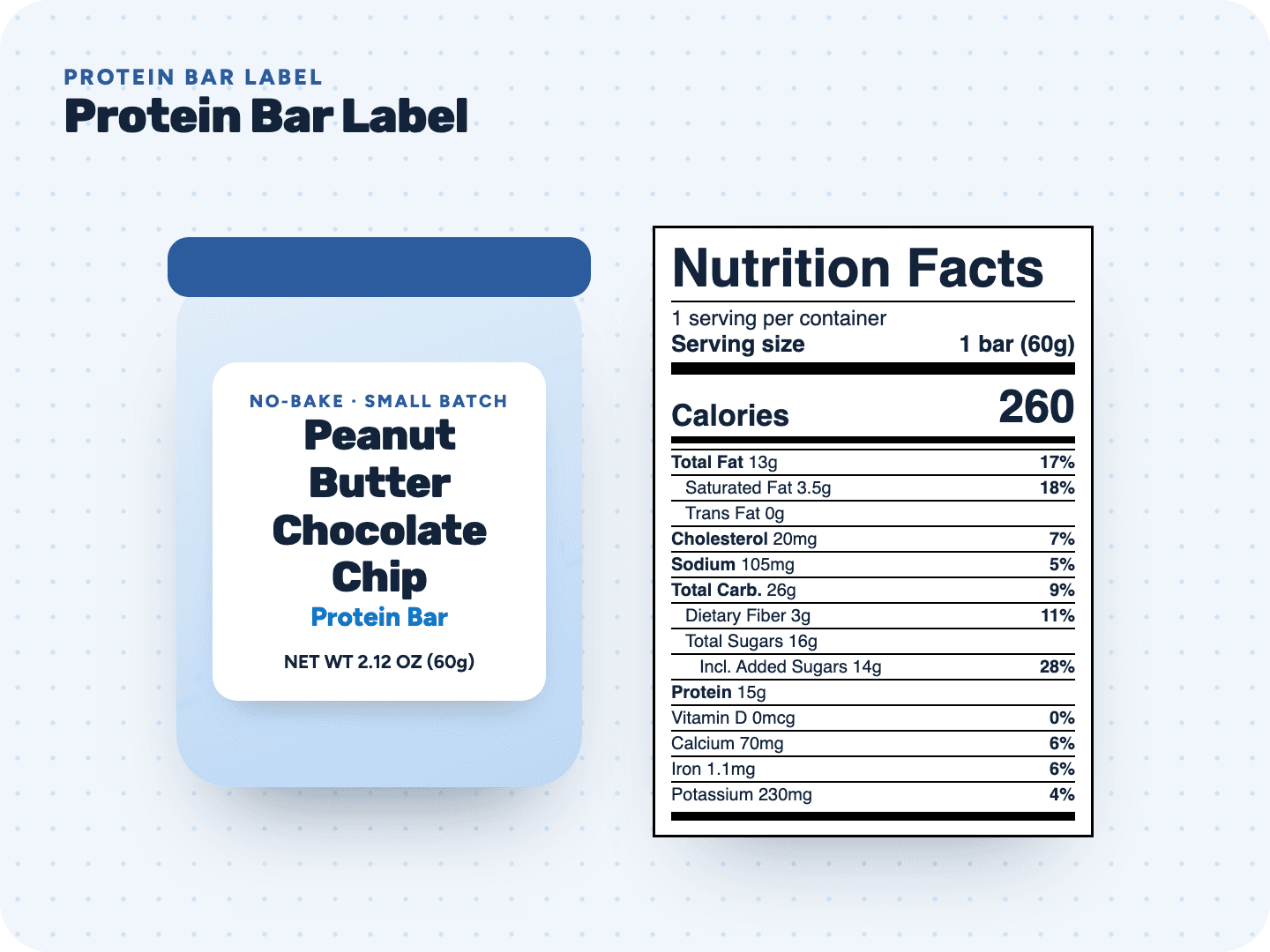
What has to be on your protein bar label
Six parts on one small wrapper. The numbers match the bar on the left.
- 1Product name21 CFR 101.3What it is, in plain words: "Peanut butter chocolate chip protein bar". Your brand name sits above it, not in its place.
- 2Net weight21 CFR 101.7Ounces and grams on the front of the wrapper: NET WT 2.12 OZ (60g). A box of 12 also states the number of bars, the weight of each and the total.
- 3Nutrition Facts21 CFR 101.9Per bar. Protein shows in grams; its % Daily Value is optional until the wrapper makes a protein claim.
- 4Ingredient list21 CFR 101.4Heaviest first. Bought-in parts like chocolate chips and protein powder show their own ingredients in parentheses.
- 5Allergen statementFALCPAWhey is milk, peanut butter is peanuts, and the lecithin in chocolate chips is often soy. Name each one: Contains milk, peanuts, soy.
- 6Name and address21 CFR 101.5Who made or packed the bar, with city, state and ZIP. A co-packer makes it for you? Use "Made for" or "Distributed by".Co-Packer →
Things that are different for protein bars
Bar wrappers and the label that fits
A wrapper leaves a narrow back panel, so the wide and linear styles earn their keep here. Switch styles in the tool and see the label change.
| Wrapper | Typical label area | Style that usually fits |
|---|---|---|
| 25 g mini bar | 2 × 1 in | Small package (linear) |
| 40 g bar | 3 × 1.25 in | Small package (linear) |
| 60 g bar | 3.5 × 1.75 in | Tabular (wide)Our example |
| Box of 12 bars | 4 × 3 in side panel | Standard (vertical) |
Start from a protein bar that's already filled in
A no-bake peanut butter bar: stir everything together, press it into a pan, chill and cut into 60 g bars. Using a different protein powder? Add it from your supplier's label and the numbers follow. Enter 60 g as the serving and 60 g as what one package holds, and the panel reads 1 serving per wrapper.
| Ingredient | Amount | Unit |
|---|---|---|
| Rolled oats✓ USDA match | 1 1/2 | cups |
| Whey protein powder✓ USDA match | 1 1/2 | cups |
| Peanut butter✓ USDA match | 1 | cup |
| Honey✓ USDA match | 1/2 | cup |
| Semisweet chocolate chips✓ USDA match | 1/3 | cup |
Protein bar label questions
Only when the label makes a protein claim, like "15 g protein", "high protein" or "good source of protein", or when the bar is made for children under 4. Then the %DV is based on protein corrected for quality (PDCAAS). Without a claim, grams alone are fine. FDA Daily Values →
One bar, for any bar between about 27 g and 79 g, using the 40 g reference amount for grain-based bars. A 25 g mini bar may be labeled as one or two bars. A bar of 80 g or more needs a closer look, because it can need two columns.
Yes. Whey comes from milk, so the label says Contains milk. The same goes for casein and milk protein isolate. Soy protein needs soy, and nut butters need the exact nut.
A bar sold as a snack or a meal is a food and gets Nutrition Facts. Our tool makes both panels, but which one applies depends on how you sell the bar, so decide that before you print. Start a label →
Our blank Nutrition Facts templates are free in fillable PDF, Word, SVG and PNG, and the peanut butter bar on this page loads into the free preview. A finished label is $29, or 10 labels for $199 when you sell a whole flavor range. Blank Nutrition Facts Label Template →
Make your protein bar label now
Free preview, no account. $29 when you're ready to print.