North Dakota Cottage Food Label Requirements
North Dakota cottage food label requirements are some of the lightest in the country. The Cottage Foods Act bans the state and local governments from requiring a license, inspection, packaging or labeling. You only have to share one statement, on the label or on a sign where you sell: "This product is made in a home kitchen that is not inspected by the state or local health department." Foods that need refrigeration get safe handling instructions and a frozen disclosure too.
What a North Dakota cottage food label must show
The law itself is short. These are the only labeling duties it gives a cottage food operator.
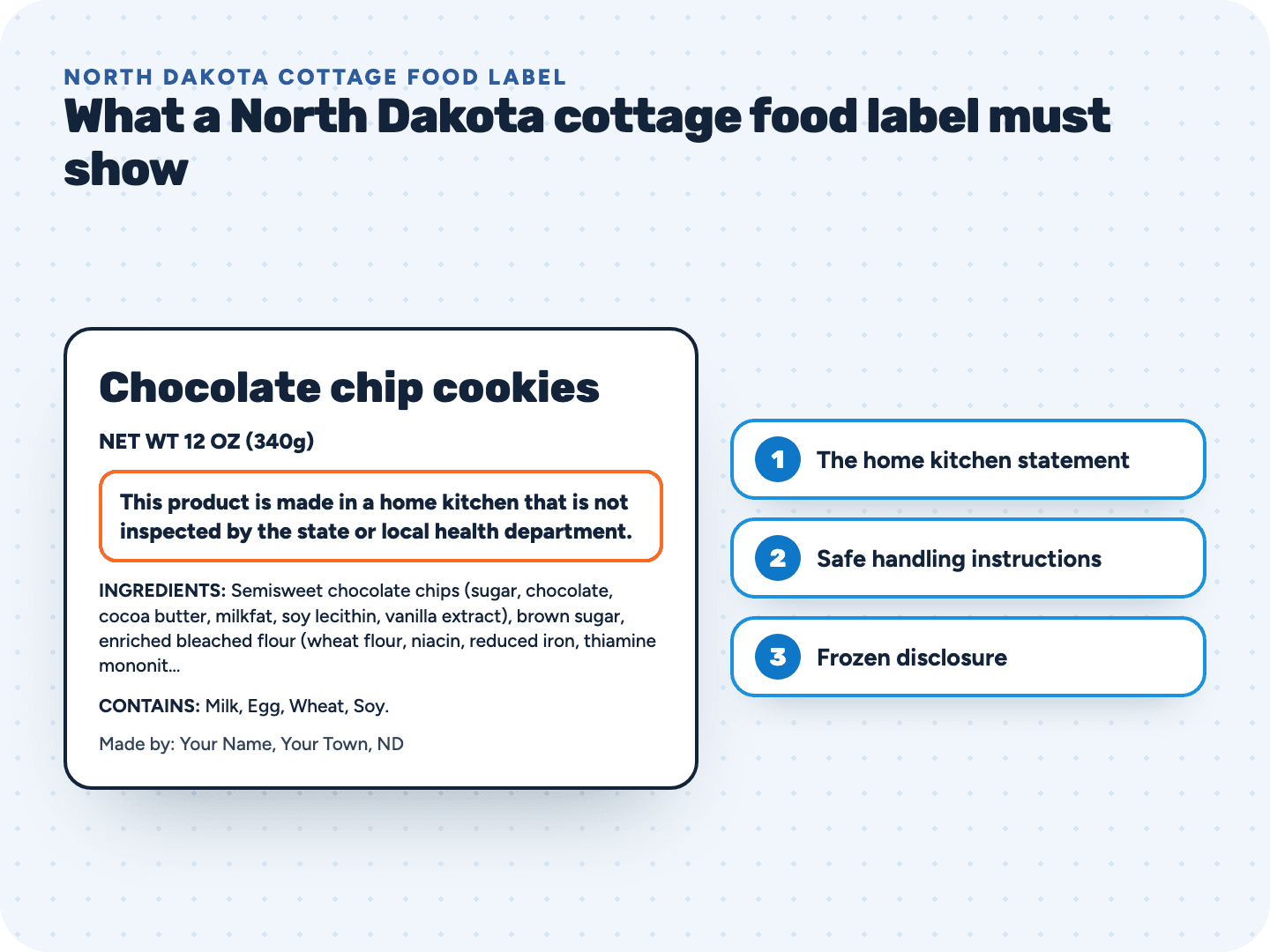
- 1The home kitchen statementN.D.C.C. 23-09.5-02(8)On a label or on a consumer advisory sign at the point of sale: "This product is made in a home kitchen that is not inspected by the state or local health department."
- 2Safe handling instructionsN.D.C.C. 23-09.5-02(7)Only for foods that need refrigeration, like baked goods with cream, custard, meringue or cream cheese, cheesecake and pumpkin pie.
- 3Frozen disclosureN.D.C.C. 23-09.5-02(7)Those same refrigerated foods also carry a product disclosure statement saying the product was transported and maintained frozen.
- Tell every buyer, label or notInformed buyerYou must also inform the end consumer that the food is not certified, labeled, licensed, packaged, regulated or inspected. Your buyer is an informed end consumer only once they know that.
License, sales limits and where you sell
North Dakota label questions
No. Under the Cottage Foods Act, no state agency or political subdivision may require a license, permit, certification or inspection for cottage food sold directly to an informed end consumer. Cottage Food Law →
Yes. The law lets you either display a consumer advisory sign at the point of sale or put the statement on the product label. A label is the safer choice for delivery and online orders, since the statement travels with the food.
Yes, but they need safe handling instructions and a statement that the product was transported and maintained frozen on the label.
No. Apart from whole, unprocessed fruits and vegetables, cottage food may not be sold or used in a food establishment, food processing plant or food store.
Yes, in two cases. The department of health and human services or a local authority may investigate after an illness or environmental health complaint, and an agency can inspect or advise you if you ask for it.
See your label before you pay anything
Free preview, no account. $29 when you're ready to print.