Kansas Cottage Food Label Requirements
Kansas cottage food label requirements are short, because Kansas has no separate cottage food law. Homemade foods that need no refrigeration or special processing can be sold straight to the end consumer without a license. The Kansas Department of Agriculture (KDA) asks for the product name plus your name and address on packaged foods, and K-State Research and Extension adds the ingredients and the quantity. There is no required "homemade" statement.
What goes on a Kansas homemade food label
Kansas runs on a license exemption, not a cottage food act. KDA and K-State Research and Extension list these four parts for packaged foods.
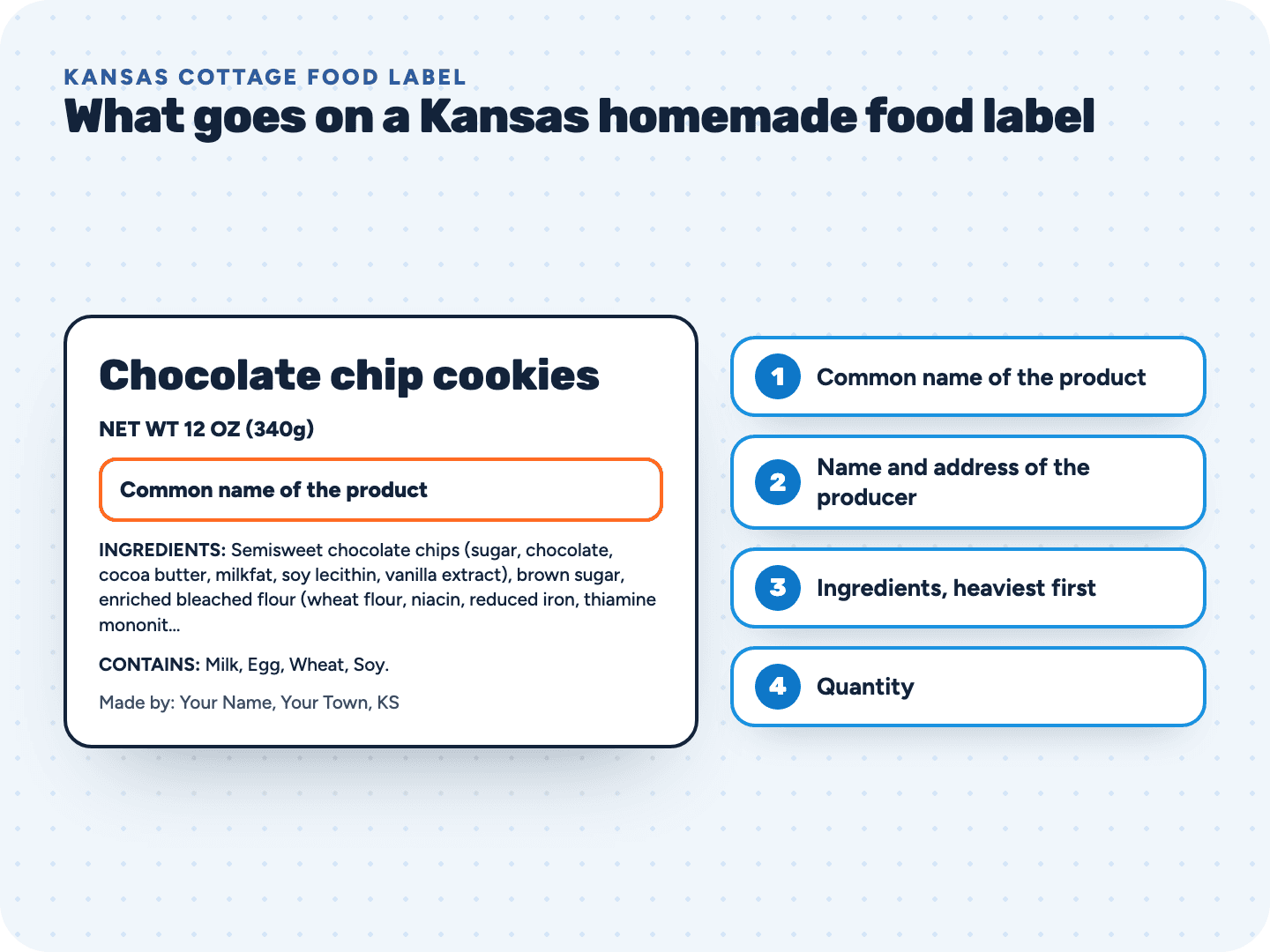
- 1Common name of the productKDAWhat the food is, in plain words: "Cinnamon Rolls", "Apple Pie" or "Dry Rub".
- 2Name and address of the producerKDAWho made or is selling the food, and where. K-State spells it out as the name and physical address.
- 3Ingredients, heaviest firstK-State MF3138List every ingredient in descending order of predominance. K-State points out this matters most to buyers with food allergies.
- 4QuantityK-State MF3138Net weight, volume or count, whichever fits the product: "NET WT 12 oz" for granola, "6 rolls" for a box of cinnamon rolls.
- No "homemade" statement requiredKansas ruleK-State Research and Extension says uninspected foods in Kansas do not need a "homemade" or "not inspected" line. You may still print "Homemade" on the label if you like.
License, where to sell and online sales
Where this comes from
- KDA: Food Sales at Farmers' Markets & Similar LocationsOfficial state page: the exemption, the label, online sales and non-exempt foods
- KDA: Food Safety FAQHome kitchens, wholesale and pepper jelly
- K.S.A. 65-689The law itself: the license exemption for direct sales
- K-State Research and Extension: Foods Sold Directly to Consumers in Kansas (MF3138)Label checklist and the list of allowed foods
Kansas label questions
Not a separate one. Kansas law exempts a person who sells food directly to the end consumer from the food establishment license, as long as the food needs no time and temperature control for safety or specialized processing. That exemption works as the Kansas cottage food rule. Cottage Food Law →
Yes. KDA allows internet sales, shipping included, under the license exemption. The state you ship to may have its own rules, so check them before you send a box across the border.
Not from your home kitchen. Selling to another business for resale, like a coffee shop, restaurant or grocery store, needs a properly equipped, licensed facility separate from your personal kitchen.
Kansas does not ask for one for direct sales. Federal rules call for one as soon as you make a nutrient claim like "low fat", or once you sell in ways a small business exemption no longer covers. Do I Need a Nutrition Label? →
Yes. KDA names spice mixes and roasted coffee beans or ground coffee as exempt foods for direct-to-consumer sales. Label them with the product name, your name and address, the ingredients and the net weight.
See your label before you pay anything
Free preview, no account. $29 when you're ready to print.