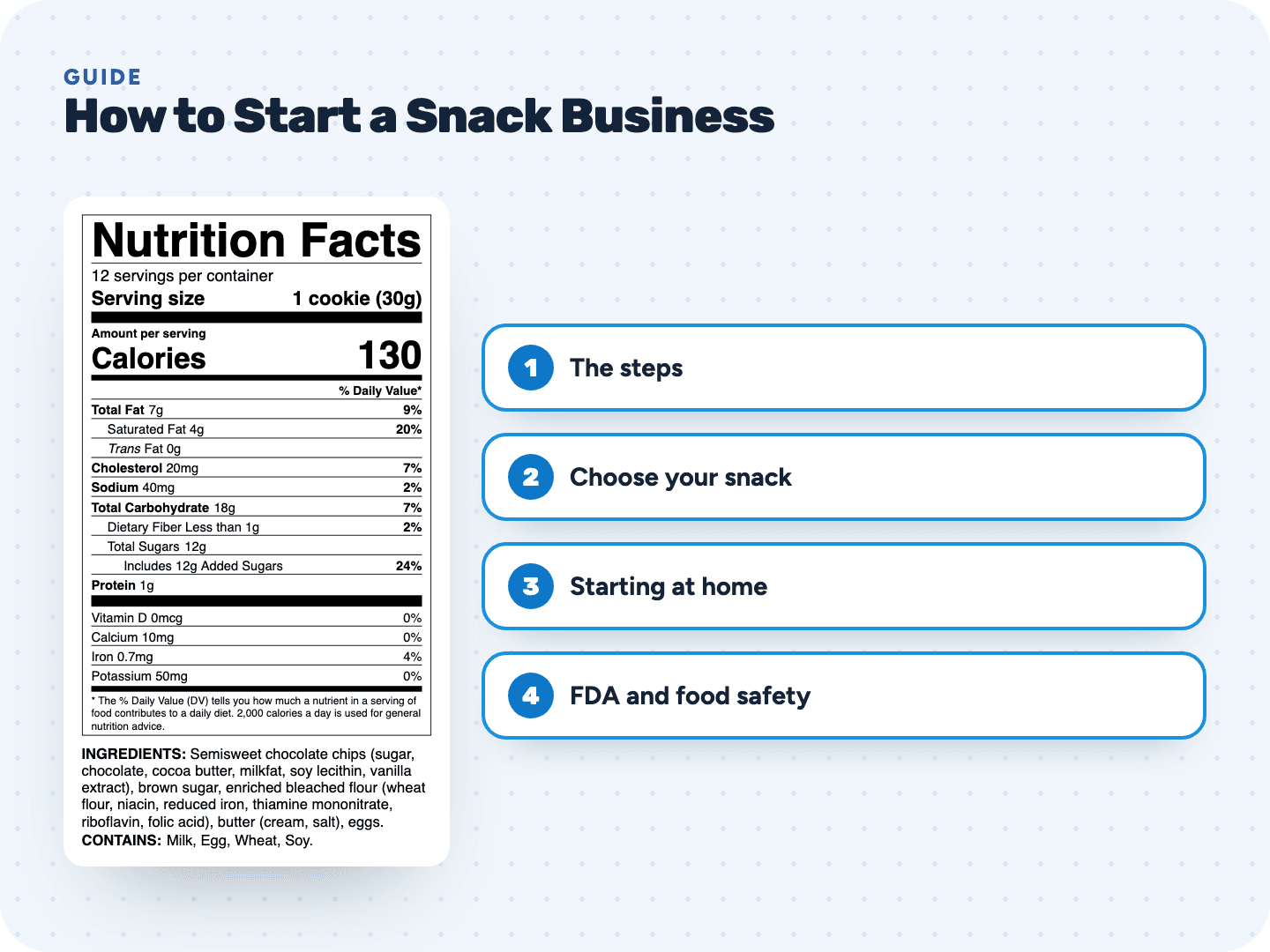
Starting a snack business, step by step
- Choose a snack and check which agency regulates it
- Read your state's cottage food law: is your snack allowed at home, and where may you sell it?
- Lock the recipe and weigh what one batch yields
- Move to a licensed kitchen or a co-packer when you sell wholesale or across state lines
- Register with FDA and set up the food safety records that come with it
- Choose bag sizes, then make a label for each size
- Pick your first sales channel and grow from there
Which snack, which rules?
Snacks split into two worlds. Popcorn, chips, pretzels, nuts, granola and most bars are FDA foods. Jerky and meat sticks are meat products, and USDA regulates meat, not FDA. This guide covers the FDA side.
Within the FDA world, the snack type also sets the serving size on your label. FDA groups them like this:
| Snack | FDA reference amount |
|---|---|
| Chips, pretzels, popcorn, extruded snacks, fruit chips, grain-based snack mixes | 30 g |
| Nuts, seeds and nut mixes | 30 g |
| Crackers usually eaten as a snack | 30 g |
| Granola bars, breakfast bars, rice cereal bars | 40 g |
Can you start a snack business from home?
Often, yes. Dry, crunchy snacks are a good fit for cottage food laws, but the details differ a lot between states. Nuts and anything made in a dehydrator are where the surprises are:
| State | Snacks under the cottage food rules |
|---|---|
| Indiana | Popcorn and chips are allowed |
| South Carolina | Granola, trail mix and roasted or candied nuts are allowed |
| New York | Popcorn, pretzels, crackers and vegetable chips are allowed; granola and trail mix with commercially roasted nuts only; raw nuts are prohibited |
| Wisconsin | Only baked goods are exempt: jerky, dried fruit and dehydrator granola need a license |
| Arkansas | Granola and trail mix are allowed; jerky needs an ADH permit |
Also check how you may sell. Some states allow online orders, some only face to face, and several states keep home producers out of wholesale to shops. Check that last point early if you picture your snacks on a store shelf.
Food Label Requirements by State →Selling Food from Home →FDA registration and the food safety rules after it
A commercial kitchen that makes or packs snacks for stores registers with FDA before it starts, renews every other year and pays no fee. Retail food establishments, which mainly sell straight to consumers, and private homes are exempt.
A registered facility also falls under FDA's food safety rule for human food, 21 CFR Part 117: good manufacturing practices, plus a written hazard analysis and preventive controls. A very small business qualifies for modified requirements: instead of the full preventive controls plan, it sends FDA attestations, on Form FDA 3942a or online, and repeats them every 2 years.
Keep records one step up and one step down
A registered snack maker keeps track of where its ingredients came from and where its finished bags went. FDA's example uses cookie dough, but the idea is the same for a bag of kettle corn: your corn and oil suppliers on one side, your stores and distributors on the other.
Simple habits make this easy: write a batch number on each case, keep supplier invoices with the batch, and log which store got which batch.
Do your snacks need Nutrition Facts?
Most packaged snacks do, with two exemptions that matter for a new business. The first covers sellers who sell directly to consumers and stay under FDA's sales limits. The second is the low-volume exemption, made for small brands that sell through stores:
| Your business | Low-volume exemption |
|---|---|
| Under 100 full-time equivalent employees, and under 100,000 units of the product sold in the US in the past 12 months | Exempt, after you file a notice with FDA before the exemption period |
| Fewer than 10 full-time equivalent employees, fewer than 10,000 units a year, and not an importer | Exempt without filing a notice |
| Any nutrition claim or nutrition information on the bag, label or ads | No exemption |
Snack brands lose this exemption easily: "high protein", "low fat" or "only 100 calories" on the front is a claim, and then the bag needs the full panel. Our tool builds the panel; it does not review claims, so check each claim against the nutrient content claim rules first.
Where do the numbers come from? FDA's start-up page mentions commercial labs, university food science departments and USDA's nutrient database.
That is the data our tool uses. Type in the recipe, approve each USDA match, and the tool returns the panel with FDA rounding and % Daily Values, plus a calculation report for a store buyer or inspector. For an ingredient we don't have, like a seasoning blend, type the numbers from the supplier's label or take a photo of it.
Nutrient Content Claims →Allergens in a snack lineup
Snack makers handle more of the major allergens than most food businesses: peanuts and tree nuts in mixes, sesame on pretzels and crackers, milk in cheese powders, wheat and soy in coatings. Our tool flags each one from the recipe and writes the Contains line, naming the exact tree nut.
If one line runs nuts and the next runs plain popcorn, a precautionary "may contain" statement is voluntary under federal law, and it has to be true.
"May Contain" Allergen Labeling →Bag sizes change the label
Snack bags are where serving size gets tricky. A bag sold on its own with under 200% of the reference amount counts as a single serving, so the panel describes the full bag. Between two and three times the reference amount, the label needs two columns, per serving and per bag. Plan your sizes with that in mind, and make one label per size.
Our tool sets servings per container from the package weight and offers the Dual column format. Print on Avery 5126, 5168, 5164 or 5163 sheets, or send the PDF to your bag printer.
Dual Column Nutrition Label →Your label, by snack
Each snack page shows a sample recipe, the serving size worked out and the label it makes:
Chips Label →Popcorn Label →Pretzel Label →Trail Mix Label →Granola Label Design →Protein Bar Label →Start your snack label free →Where to sell your snacks
| Channel | What it takes |
|---|---|
| Farmers markets and events | Often possible under a cottage food law, with samples to win buyers |
| Your own web shop | State rules for home producers; a licensed kitchen to ship across state lines |
| Coffee shops, gyms and gift shops | Wholesale: usually a licensed kitchen, FDA registration and a full label |
| Grocery chains | All of the above, plus whatever the retailer asks of its suppliers |
Not ready for your own kitchen? A co-packer makes your snack under its license. Your label then names you as the brand, for example "Distributed by", with your city, state and ZIP.
Co-Packer →How to Sell Food Online →